High-quality tiles for industry and commercial applications
Our industrial tile range includes a wide choice of formats, thicknesses, colours and surfaces. Whatever project you are working on, we have the right solution. Whether for acid-resistant construction, heavily trafficked areas or vibration-set applications, we have the perfect tile. Our innovative features set us apart. Kerasiegel surface treatment gives the tiles an additional protective layer, making them more durable and easier to clean. Z-Spacer spacers ensure precise installation and a flawless result.

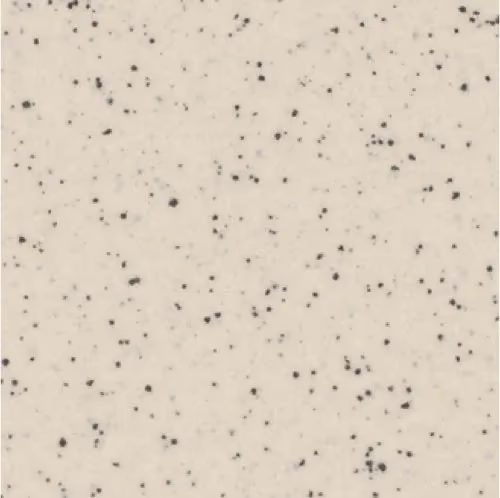
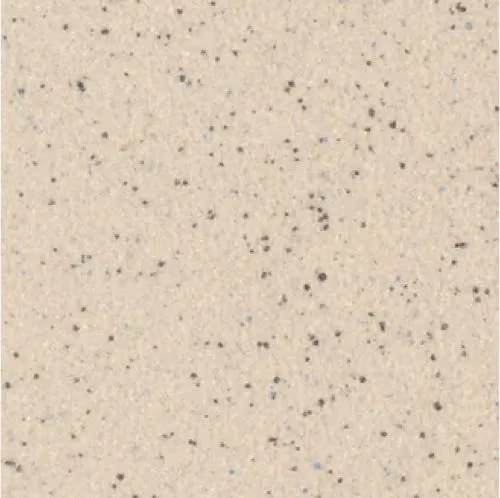
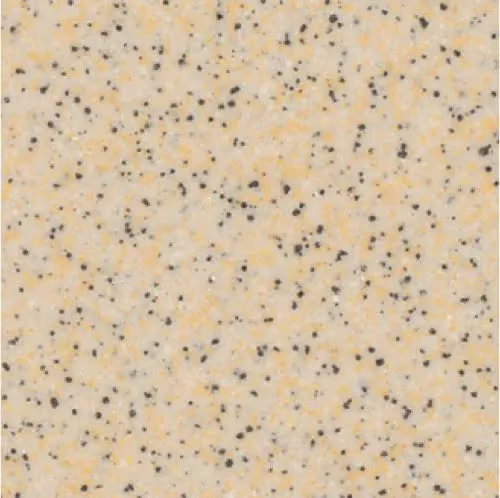
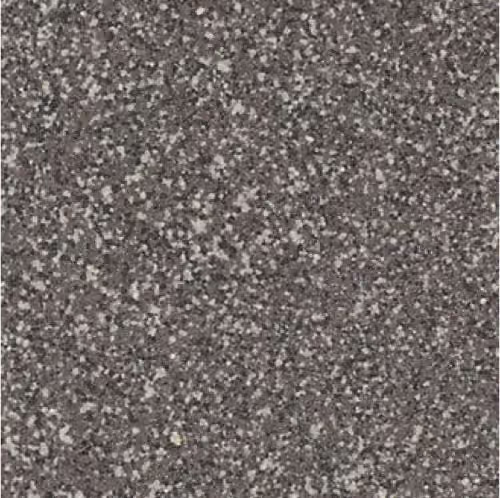
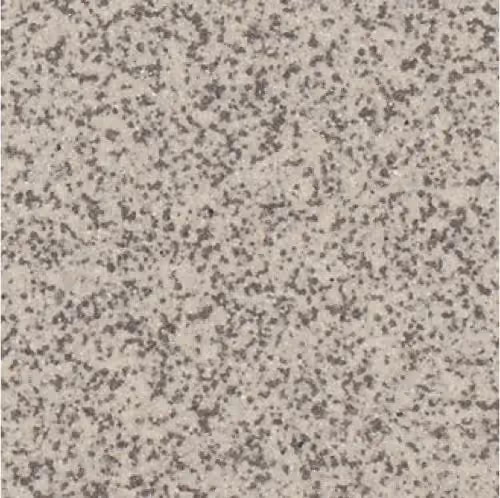
Compare colours and patterns



.svg)




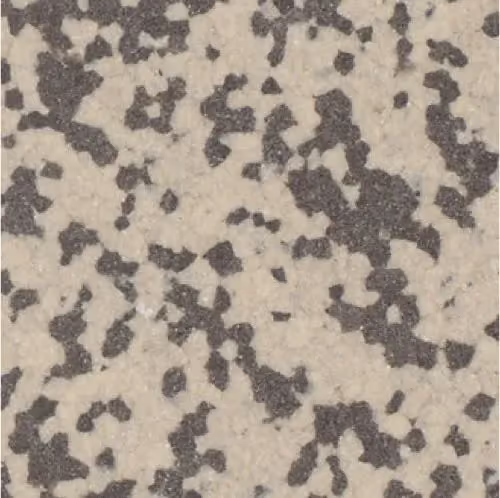


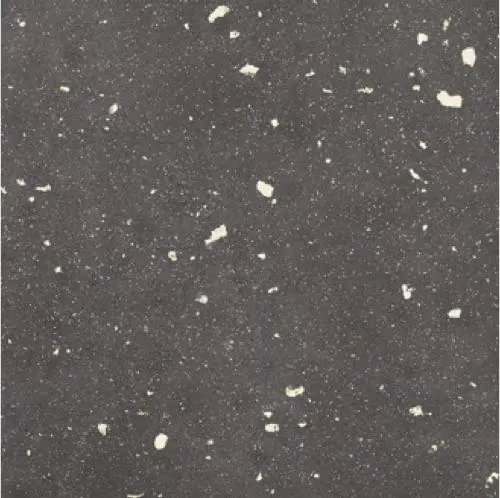
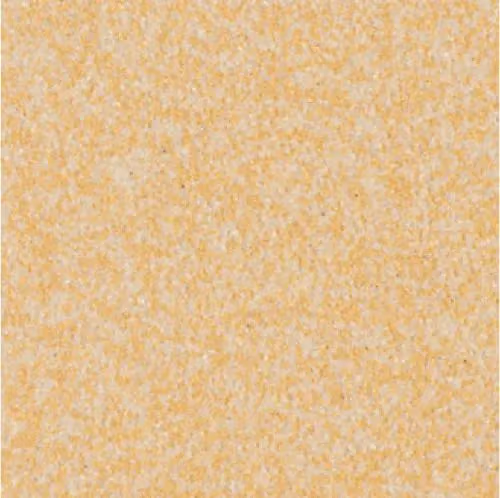

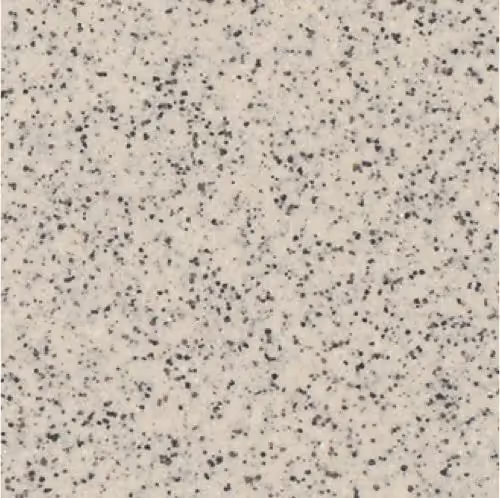
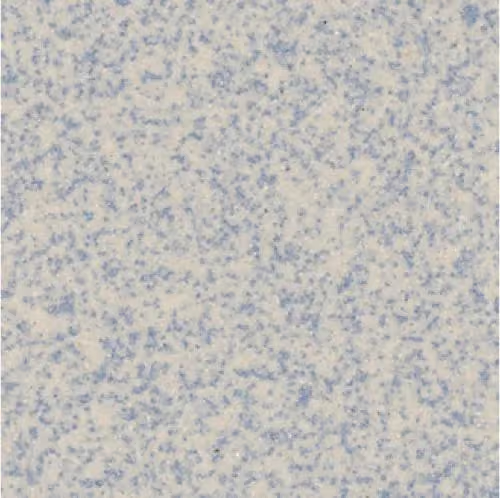

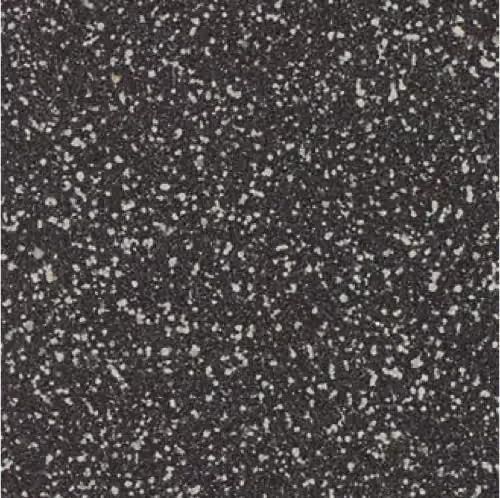

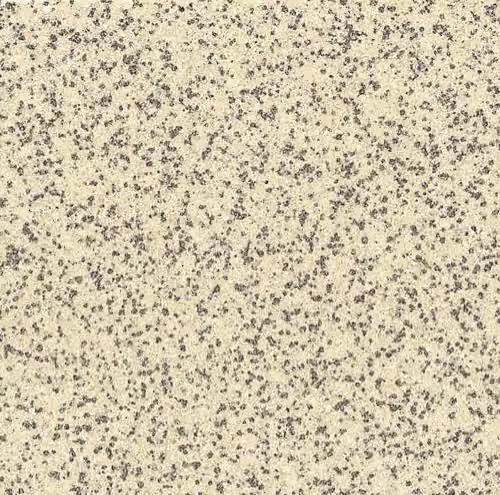
Compare surfaces


Available thicknesses and sizes
Recognised standards and awards



DIN EN ISO 50001

DIN EN ISO 9001


Always the right solution


High-traffic areas
In high-traffic environments such as car and truck workshops, fire stations, and other demanding settings, a robust and durable flooring solution is essential. This is exactly where our specially developed industrial tiles come in, designed to withstand even the toughest conditions.
Our heavy-duty tiles, available in 15mm and 18mm thicknesses, offer exceptional durability that effortlessly meets the demands of high-traffic areas. Whether subjected to heavy vehicles or the intense stress of machinery and equipment, our tiles remain steadfast and maintain their outstanding performance.
Our industrial tiles are available with slip resistance ratings from R10 to R13V10. This ensures that employees and visitors maintain a secure footing, even in oily environments, minimizing the risk of injury.
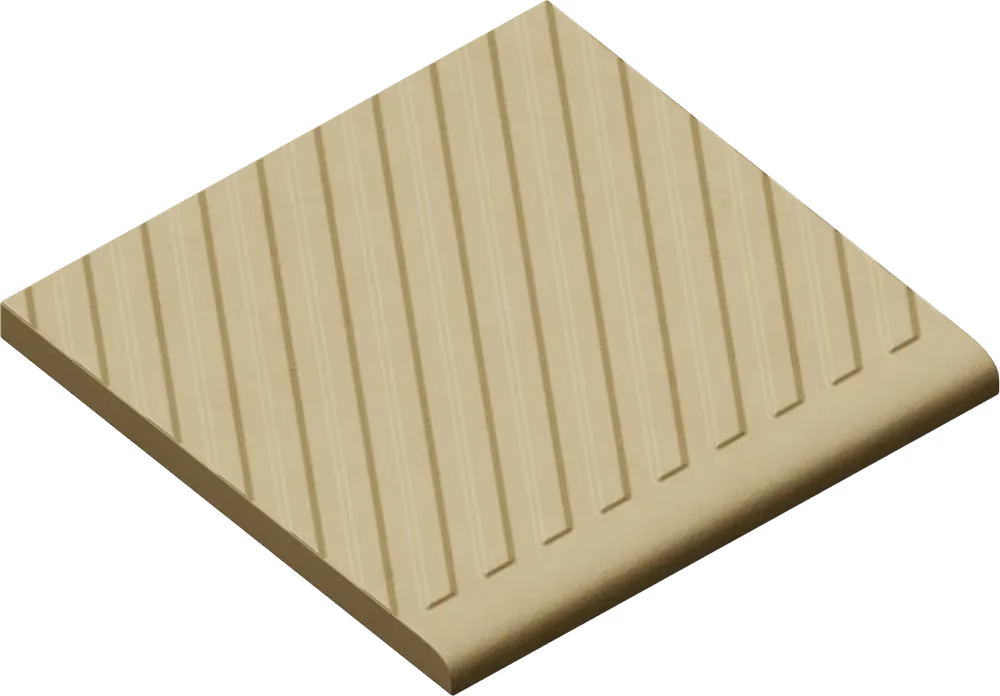
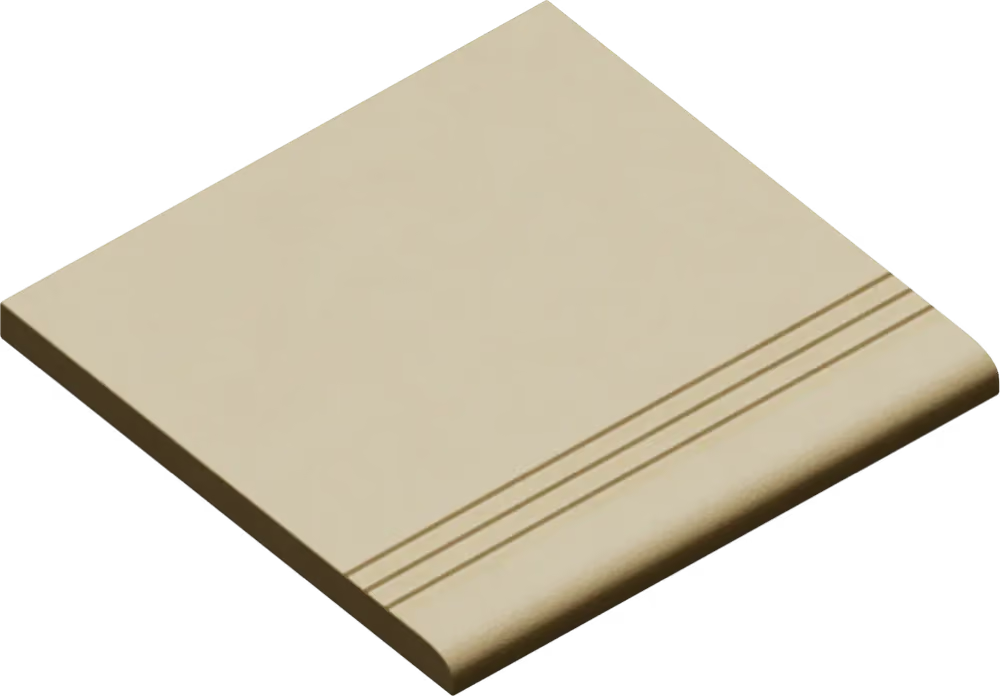
We also offer signal strips that are ideal for use around workshop pits. These strips serve as a visual warning, helping to effectively mark hazards and prevent accidents.


Acid-resistant construction
Tiles for acid-resistant construction: The perfect solution for the food industry, breweries, and beverage production.
In the demanding world of the food industry, breweries, and beverage production, high-quality, resilient equipment is essential. This is where Zahna tiles come in, proving to be the ideal solution for these specialized applications.
Our comprehensive product range offers tailored solutions for all areas of acid-resistant construction. The unique properties of our tiles make them the perfect choice for demanding environments where acids, chemicals, and other aggressive substances are present.
Hygienic cleanliness is of the utmost importance, especially in the food industry, breweries, and beverage production. Our tiles are not only easy to clean but also resistant to the chemical influences typically found in these sectors. They can withstand even the harshest conditions, ensuring long-term, reliable performance.
Our tiles offer more than just high functionality; they also provide aesthetic versatility. In addition to classic speckled colors, we offer an extensive range of beautiful, vibrant colors that can be perfectly combined. This allows even industrial spaces to be visually enhanced and turned into a real eye-catcher.
Show breweries are a prime example, as they are designed to be a visual experience for visitors as well as a production facility. With our tiles, show breweries can create an inviting atmosphere while meeting the highest standards of hygiene and durability.


Vibration laying with Zahna tiles
Vibration laying for industrial tile flooring is a specialized technique that offers distinct advantages over standard installation methods. During vibration laying, tiles are set into a thin layer of mortar or adhesive using a vibrating machine to ensure precise, level alignment. This method provides numerous benefits, particularly in high-traffic areas using heavy-duty tiles.
1. Time savings: Vibration installation allows for significantly faster installation compared to traditional methods. By using a vibration machine, more tiles can be laid in less time.
2. Improved durability: The uniform and firm bond between the tile and the substrate creates a particularly durable and resilient surface structure. This is especially important in industrial areas where high loads from heavy machinery, vehicles, or heavy foot traffic occur.
3. Lower risk of errors: Vibration installation minimizes the risk of errors during tile placement. The vibration machine ensures precise alignment, preventing uneven grout lines or crooked tiles.
4. Visually appealing: Thanks to precise installation without uneven edges, the result is an aesthetically pleasing surface. The uniform grout lines give the space a modern and clean appearance.
5. No uneven edges: In industrial areas, it is essential to have a level floor so that transport vehicles and pallet jacks can move smoothly and quietly. Precise installation without uneven edges minimizes the risk of tripping accidents, thereby contributing to the safety of employees and visitors.
7. Long-lasting protection: Vibration installation ensures better load distribution across the tiles, resulting in higher load-bearing capacity. This helps the flooring maintain its quality and functionality over a long period, even under intensive use and heavy loads.
Overall, vibration installation with Zahna tiles provides an efficient, durable, and aesthetically pleasing solution for industrial flooring, particularly well-suited for high-traffic areas requiring heavy-duty tiles. It ensures a resilient floor covering that meets the demands of industrial environments while maintaining a professional and clean appearance.

Customers who have already put their trust in us


Need personal advice?

Z-Spacer technology
The Z-Spacer® is a profile formed on the edges of ZAHNA tiles that ensures rapid installation with a defined joint width. Due to the special design of the Z-Spacer, the joint space is kept open throughout, allowing for easy filling with grout.

Especially during vibrated installation, but also when creating pseudo-electrically conductive floor coverings, this ensures a continuous connection between the mortar bed and the grout. The Z-Spacer also prevents chipping at the top edge of the tiles during the vibration process. Combined with the high dimensional accuracy of the products, the Z-Spacer ensures a consistently narrow joint pattern with a stable joint.
Perfect for industrial floors
The ceramic vibrated floor is a flooring system for large areas in commercial and industrial sectors subject to heavy loads. In this type of installation, extra-thick tiles are highly compacted into a mortar bed using a vibrating machine. This creates a compact unit consisting of the tile covering and the bedding. This allows large areas to be produced in a short time with excellent flatness, maximum stability, and durability. Follow-up costs are significantly lower compared to other coating systems. Due to their low water absorption of < 0.5% and extremely high compressive strength, ZAHNA tiles are predestined for industrial floors. Their dimensional accuracy and color homogeneity also make them ideal for large areas installed as vibrated floors. This quality standard is reflected in our membership as a "Quality-Monitored Supplier" of the AKQR.
Floor structure
Vibrated installation on a separating layer
A floor structure with a separating layer is required when movement of the substrate is expected. This is the case, for example, in ceiling constructions where deflection due to loads may occur. It is also required on fresh concrete slabs where shrinkage is not yet complete. When using separating layers (e.g., PE film, at least 0.2 mm), these should generally be installed in two layers. Existing waterproofing and vapor barriers can be considered as one layer of the separating system. The layers of the separating system should be laid smoothly and without ridges. The thickness of the bedding mortar should be at least 65 mm and meet a compressive and flexural strength class of C 16/F3.

When installing in a bonded system, ensure the surface of the installation substrate has sufficient strength. Before applying the bedding mortar, remove any binder accumulations, impurities, and dust using appropriate measures. The substrate must be treated with a bonding agent (factory-made or site-mixed); pre-wetting may be necessary.
The thickness of the bedding mortar should be at least 40 mm and meet at least a compressive strength class of C 16.
Creep and shrinkage deformations of the load-bearing substructure should be largely complete before this installation method is used. For concrete, this is generally the case after approximately 6 months.

Appropriate insulation layers can be incorporated into the floor structure for thermal and impact sound insulation. When installing insulation layers, the insulating materials must be laid with tight joints. Insulation boards should be arranged in a bond pattern and laid firmly and fully across the substrate, using adhesive if necessary. For multi-layer insulation, the joints must be staggered.
The insulation layer must be suitable for the expected load, and its compressibility must not exceed 3mm, even when using multiple layers.
For this floor structure, the bedding mortar should have a thickness of at least 85mm and comply with compressive and flexural strength class C 25 / F4.

Ceramic surface finishing
Kerasiegel surface finishing is standard at ZAHNA-FLIESEN. During firing, the finish is permanently bonded to the ceramic body. ZAHNA porcelain stoneware tiles can also be supplied without Kerasiegel surface finishing on request.

Benefits of the surface finish
- ceramic sealing of the tile surface
- no impregnation required after installation
- less soiling
- easy cleaning
- elegant, silk-matt sheen
- intensive colour effect
Safety strips


Item no.: 415156002.SG

Item no.: 415156002.02


Slip resistance class R11V0.
Calculated per piece,
but orders in linear meters are possible.
Technical data


Dimensions and surface quality
According to DIN EN 14411:2016, Group BIa
Technical data
- Length and width: ± 0.6% (max. 2mm) – EN ISO 10545-2
- Thickness: ± 5% (max. 0.5mm) – EN ISO 10545-2
- Straightness of edges: ± 0.5% (max. 1.5mm) – EN ISO 10545-2
- Rectangularity ± 0.5% (max. 2mm) – EN ISO 10545-2
- Surface flatness ± 0.5% (max. 2mm) – EN ISO 10545-2
- Surface quality: min. 95% defect-free – EN ISO 10545-2
ZAHNA floor tiles also meet the stringent requirements for tight-joint installation, as demanded by the vibratory installation method.
Physical properties
- Water absorption: max. 0.5% – EN ISO 10545-3
- Flexural strength: min. 35 N/mm2 – EN ISO 10545-4
- Breaking strength: min. 1300 N – EN ISO 10545-4
- Frost resistance: passed – EN ISO 10545-12
- Resistance to deep abrasion: max. 175 mm3 volume loss – EN ISO 10545-6
- Reaction to fire: A1FL – CWT
ZAHNA floor tiles meet strict requirements regarding physical properties.
Chemical properties
- Chemical resistance (excluding hydrofluoric acid compounds): min. Class B guaranteed – EN ISO 10545-13
- Stain resistance: tested – EN ISO 10545-14
The required test certificates can be provided by our sales department upon request.
Technical properties


Compressive strength and load-distributing effect of ZAHNA tiles
In the overall system of tile and substrate, the substrate is always the weaker component. The load-distributing effect of tiles and slabs depends on their thickness. As tile thickness increases, so does the load required to cause breakage. For areas where point loads are expected, the professional choice is: High Traffic tiles from Zahna.
2. Flexural tensile strength/breaking strength according to EN ISO 10545-4
The flexural tensile strength B is determined on five samples as a three-point load in N/mm² according to the following equation:

3. Breaking strength
For extra-thick tiles, the breaking strength values in Newtons are significantly higher than the required nominal values. For example, the 18 mm thick tiles manufactured in Zahna withstand breaking loads of at least 7500 N, making them the ideal flooring for heavy-duty areas.

4. Water absorption
Water absorption indicates the weight increase in percent of water-saturated samples compared to their dry weight.
5. Frost resistance
Frost resistance is tested in accordance with EN ISO 10545-12. After water saturation, the integrity of the tiles is checked after 100 freeze-thaw cycles. However, the frost resistance of an outdoor surface does not depend solely on the quality of the tiles used. Professional floor construction and installation are essential.
Please refer to the technical bulletin from the Central Association of the German Construction Industry regarding "Floor coverings made of tiles and slabs for outdoor areas."
6. Deep abrasion
For deep abrasion of unglazed tiles, the material loss is measured in mm³ using a rotating disc and an abrasive medium in accordance with EN ISO 10545-6; the lower the value, the more wear-resistant the material.